Manif 11 - Public Art
le kaméléon
Abbas Akhavan
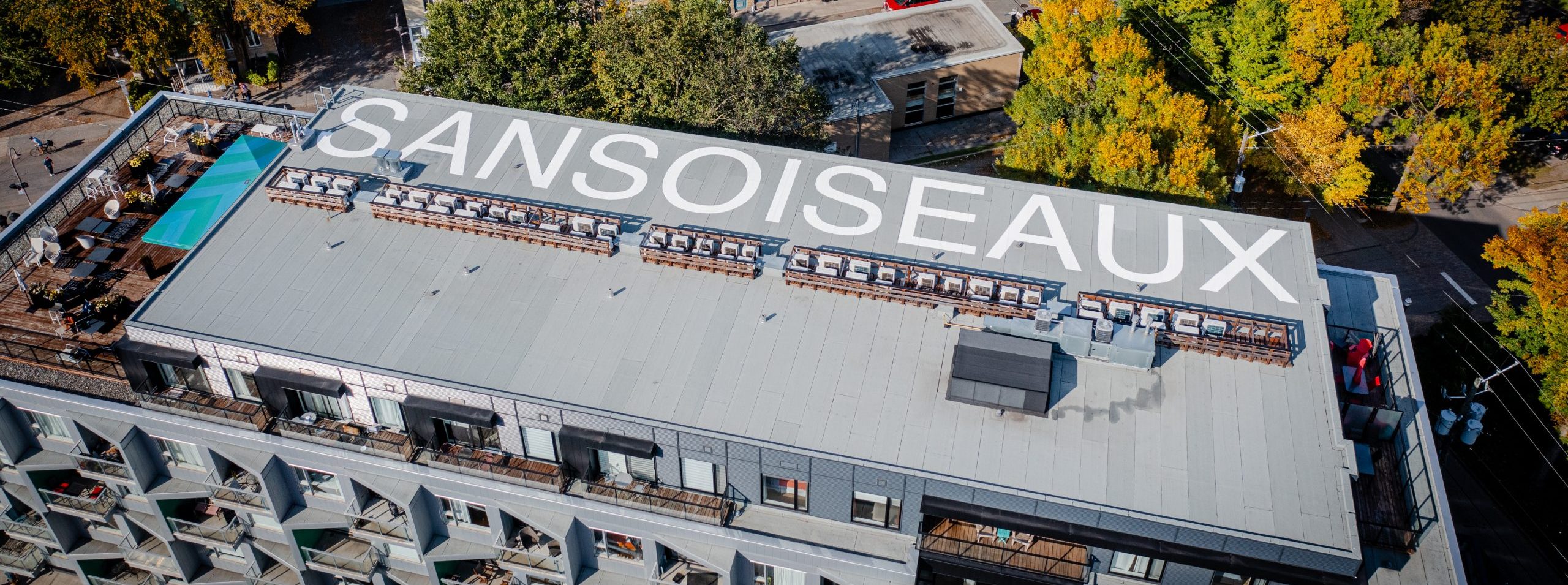
SANSOISEAUX, 2024, Peinture à l’eau
SANSOISEAUX is a conceptual artwork that consists of the title’s letters painted in large scale on the rooftop of a building. This project gives rise to a series of contradictions. The letters are only visible from the rooftop itself or, possibly, from a taller vantage point on a neighbouring building. However, the rooftop remains perpetually invisible, as it is inaccessible to the general public and stands as the tallest building in the area. One might expect these letters to be visible from an aerial perspective, for example from an airplane, but that is unlikely because planes fly at too high an altitude. The text implies a threat to the avian species and can only be read "as the crow flies." Although Abbas Akhavan addresses birds as though they can read, it underscores a deeper message for us: a world without birds would signify a world without humans.
© Jean Gaboury, masian

Maison Tsawenhohi'
Alexis Gros-Louis
978-0816630288 (Deleuze), 2024
Alexis Gros-Louis construit un modèle réduit d’un bâtiment dont l’original qui domine la ville de Scarborough, reproduit une tour médiévale dans le vocabulaire de la modernité consumériste. L’artiste s’intéresse aux malentendus que produisent les rêves grandeur nature, par exemple recoudre le passé et le présent en associant progrès et rentabilité, nombreux dans le traitement prescrit à la culture des Premières Nations. Tout rêve, selon le philosophe Gilles Deleuze, renferme une terrible volonté de puissance : « Méfiez-vous du rêve des autres. » Contre le cauchemar d’une transformation de la culture en folklore, Gros-Louis prend le parti de la décroissance. Réduisant un signal urbain fort à un jouet, il le pose dans un jardin et le peint en noir.
LIEU BIENTÔT DÉVOILÉ
ANDY WARHOL
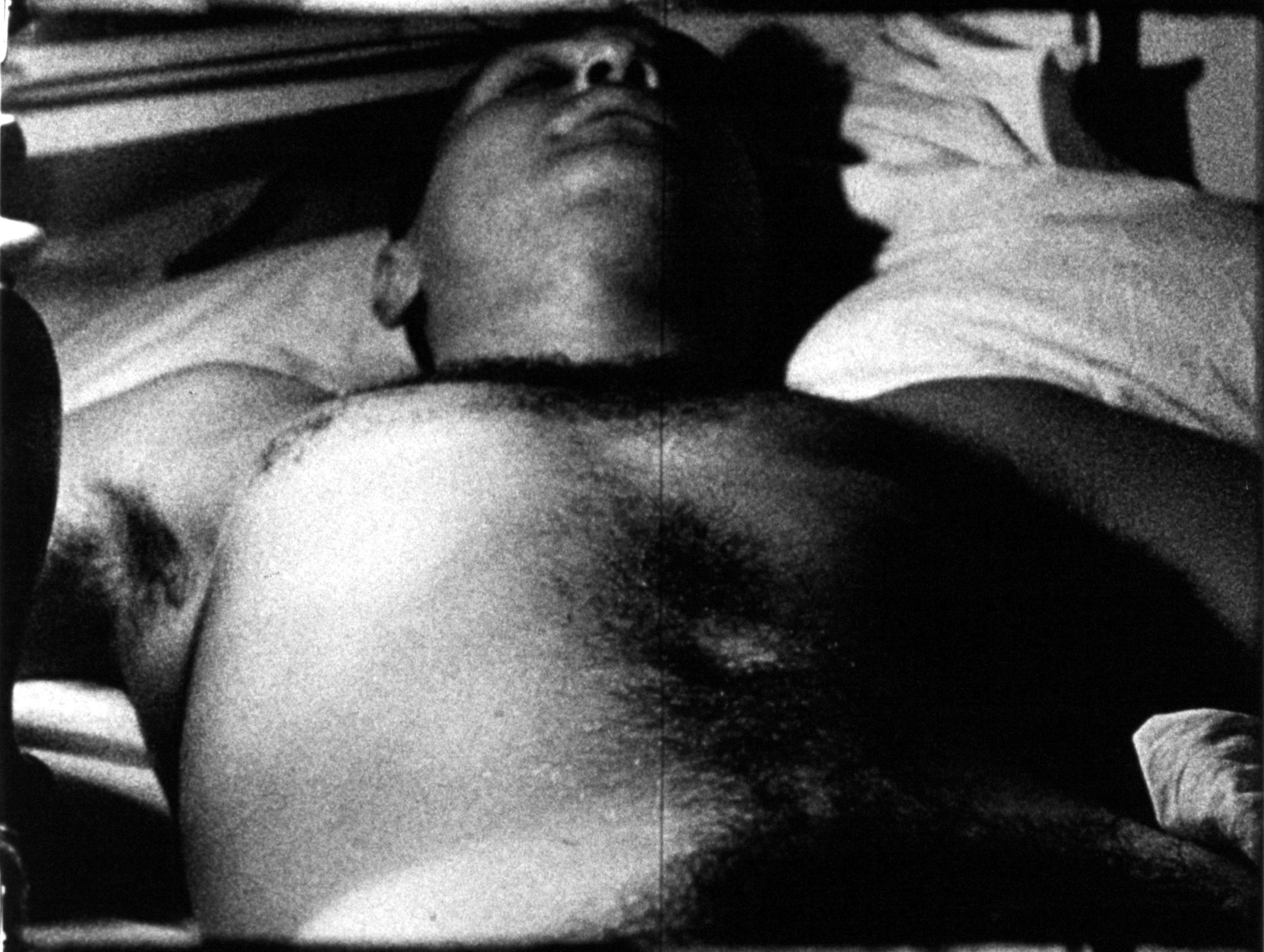
Sleep, 1963, film, 5 heures 21 min
Andy Warhol’s first major film was shot in 1963 in the apartment of his lover, the poet John Giorno. Filmed in black and white with a Bolex 16mm camera, it features a montage of silent, static shots that are sometimes repeated and looped. The film confronts us with the intimacy of sleep while fragmenting the body into sometimes indecipherable parts. Sleep was created as an “anti-film” in that it does not require the viewer’s continued attention, and offers no variation in intensity or any major action. On the other hand, it evokes what we become in movie theatres—someone whose body is at rest and whose attention is taken elsewhere: to moving images.
MANIF D'ART
christine rebet
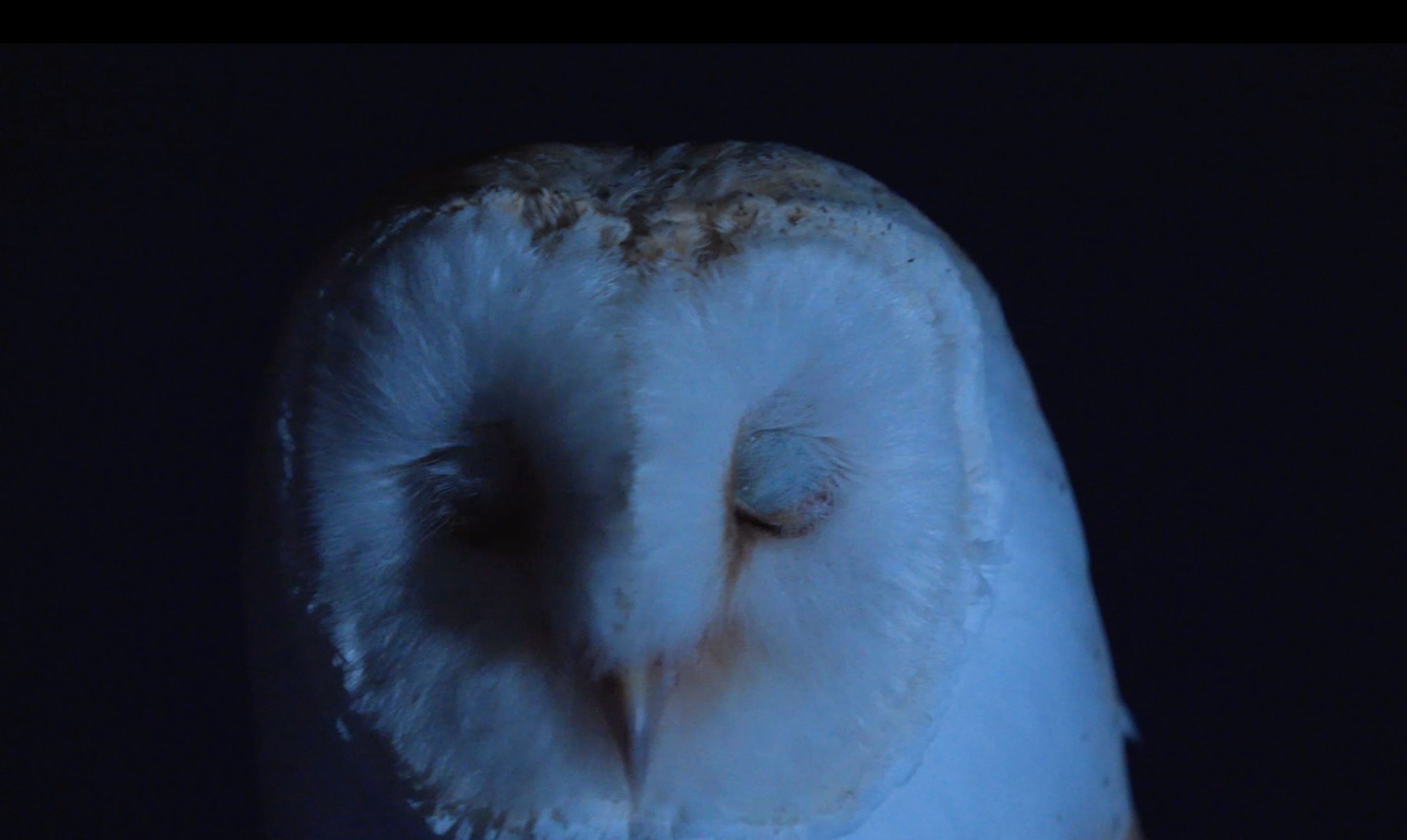
nuit, 2023, vidéo
Directed by Christine Rebet
Director of photography: Samir Ramdani
Sound and editing: Fabrice Gerardi
Colorization: Federico Ricci
Mixing: Benoit Hery
Animal trainers: Muriel Beck, Lisa Humboldt, Adèle Herteau
Owl: Blanche
Voice: Christine Rebet
Coproduced by the Manif d’art – La biennale du Québec Thanks to Marie Muracciole, Simone Fatale, Valentina Suma, Guillaume Maidatchevsky, Muriel Beck, Lisa Humboldt, and Adèle Herteau from Animal Contact.
Christine Rebet reads two texts that respond to each other from a distance, in two distinct locations and two separate works. American composer John Cage’s A Lullaby (1993), is mimicked in English by a cockatoo. The French version of Nuit, by the Lebanese artist Etel Adnan (2017) is embodied by an owl in the dark. Both birds come to life as these poetic texts are read without expression, following the rhythm of a chorus. A voice gently rocks us. An animal briefly embodies it. Two languages, familiar or not, add their own accents and colours. The tiny displacements the artist activates and the birds’ mesmerized gazes suspend us in the act of listening.
PANNEAUX PUBLICITAIRES
felix gonzalez-torres
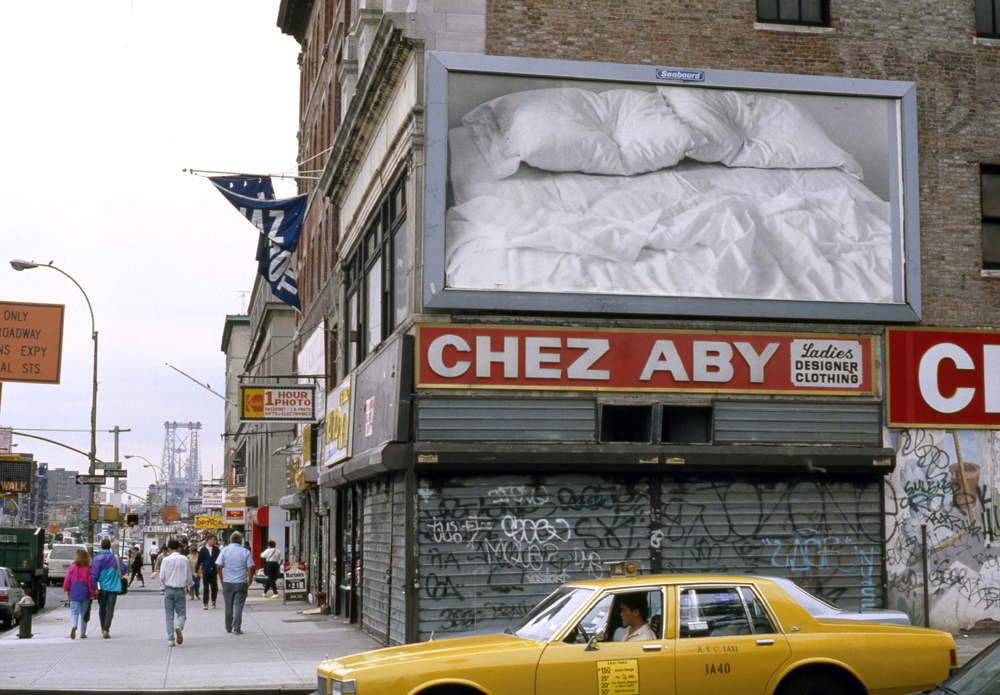
"Untitled", 1991, impressions sur panneaux publicitaires
À la manière d’un virus, une œuvre d’un artiste mythique apparaît sur de multiples panneaux publicitaires dans les rues de Québec dans un silence voulu. Ni discours, ni objectif apparent, ni titre : une image muette sur un support vernaculaire perturbe nos habitudes urbaines. Aucun cartel n’accompagnant ces apparitions, on ne nous dit pas quoi penser, nous sommes livrés à nous-mêmes, dans l’espace public et dans une mémoire intime à la fois. L’exercice, individuel, nous place au cœur de la vie collective et des contagions qui l’ont affectée ces dernières années.
© © Estate Felix Gonzalez-Torres, courtoise de la Fondation Felix Gonzalez-Torres
Projects 34: Felix Gonzalez-Torres. The Museum of Modern Art (MoMA), New York, NY. 16 May – 30 Jun. 1992.
Photo : Peter Muscato
PARC-DE-L’ARTILLERIE
françois morelli
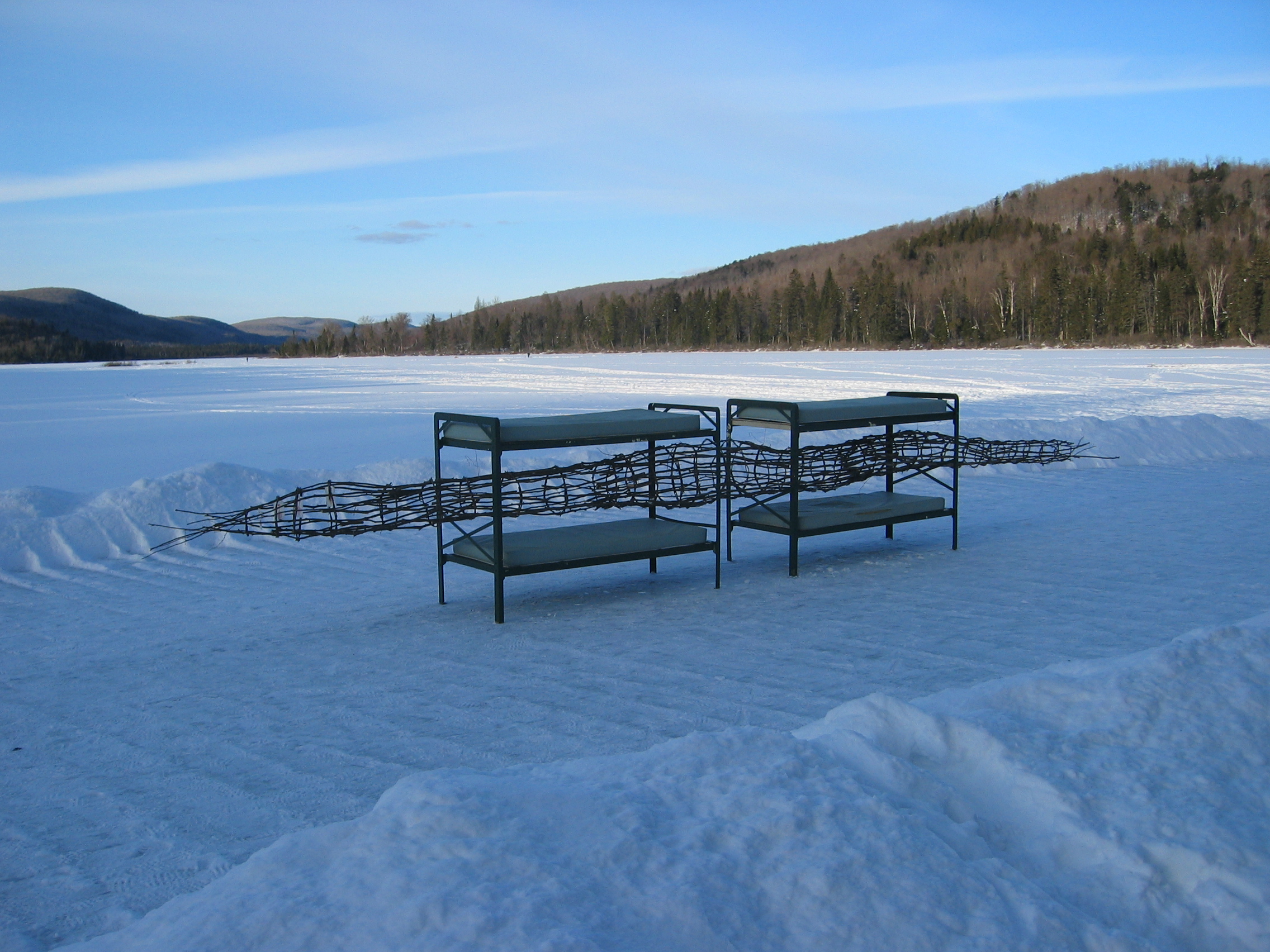
le somnambulle, 2005-2023, métal, bois
François Morelli has reactivated a visual device from a 2005 performance he carried out on a frozen lake in Québec. A pair of bunk beds with a wooden creel—or verveux, in French—makes reference to the living conditions experienced by day labourers in Québec’s forest industry, and to the trees they must harvest. The resulting assemblage reminds us of the workers’ bodies, of the precariousness of their sleep and that of the forest. The work’s title is a warning against our delayed reactions in the face of depleting natural resources, as though we were sleepwalking instead of dealing with the necessary changes we must make.
© François Morelli
Terrasse du Chevalier-de-Lévis
laure tixier
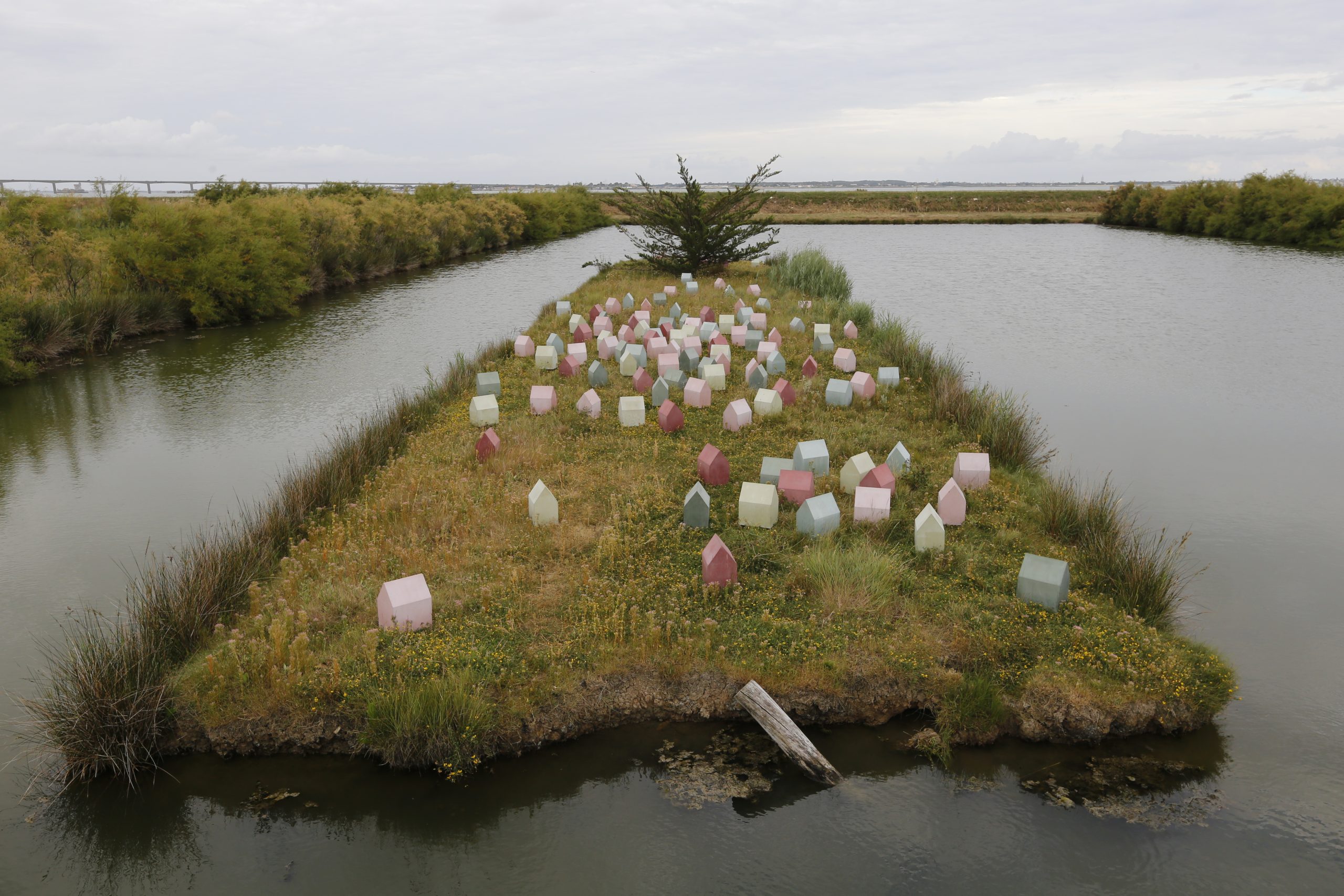
Suspendre, 2024, béton teinté dans la masse
Facing Quebec City, overlooking the River, Laure Tixier presents the concept of refuge and shelter with two simple house designs. These are constructed using concrete, a material associated with modernity and extraction. Their starkness is softened by incorporating two plant-inspired hues. Although they are built to human scale, they lack any doors or windows, and stand in sharp contrast with the group of houses we encounter at Regart. Exploring ideas of cold and warmth, openness and closure, sturdiness and flexibility, abstraction and decoration, and visual and sensory elements, these two installations delve into the relationship between the human body and the structures built to accommodate it. They reflect and reconfigure various architectural and sensory qualities. In this exchange, Tixier raises an issue more timely than ever that is central to her work: that of exclusion and inclusion.
© Potager, 2016 © Benjamin Caillaud - Biennale Amers Olerons
JARDIN DES GOUVERNEURS
magali hébert-huot
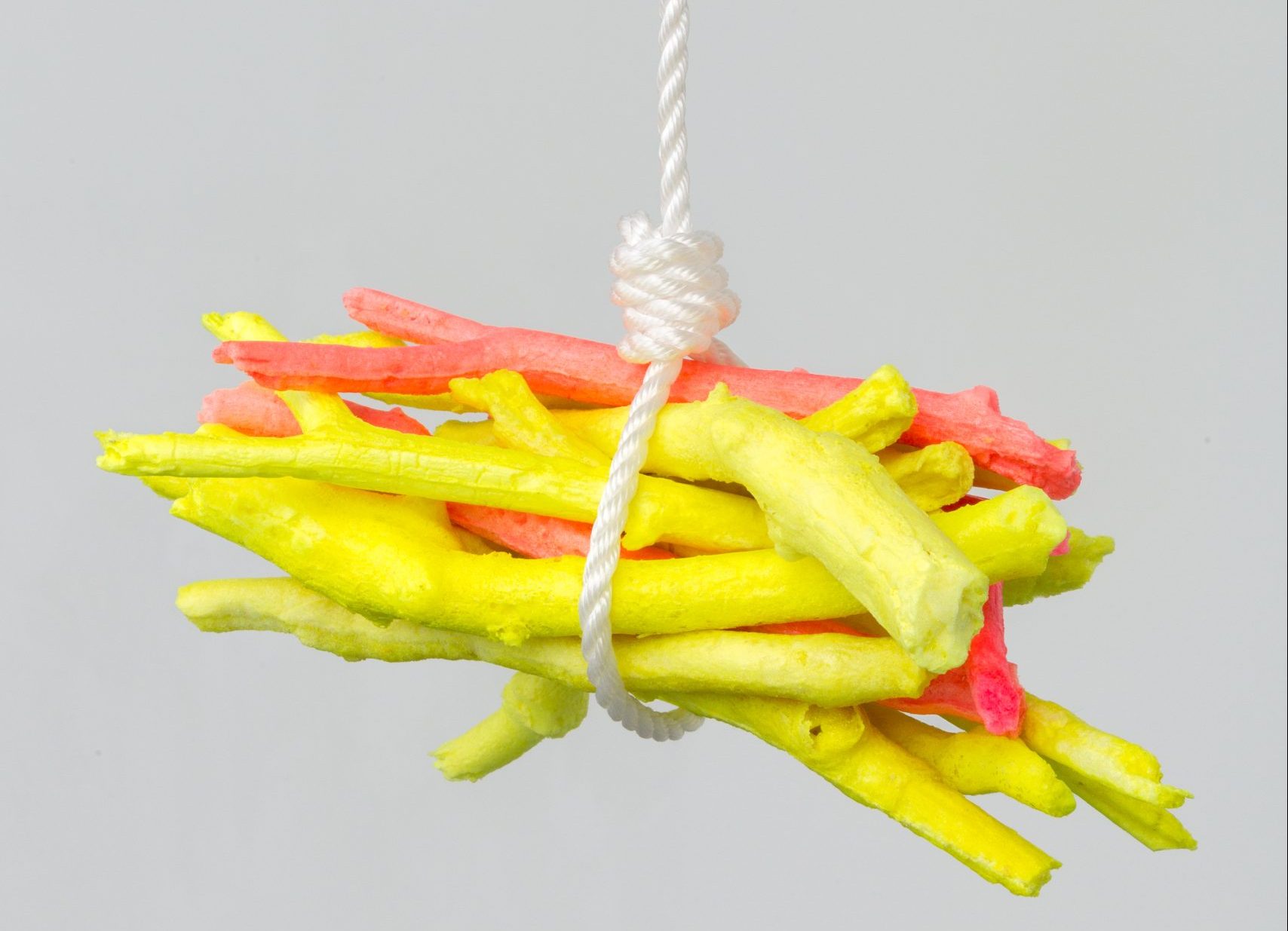
abrité-snug, 2024, arbres, résine, polyuréthane, sangles
Magali Hébert-Huot modifies one of the ways of protecting trees against extreme cold or drought, disease, or damage from humans or animals. This is done by circling the trunks of orms of America with the trunks of young conifers that have had their branches stripped off. Fluorescent-coloured artificial branches add to work's hybrid nature. These combinations between species, ages, artifacts, and plants connect the act of protection with broader themes related to diversity and gender, which are key focuses in the artist's work.
© Untitled (Swinging Bundie Yellow), 2018. Mousse à expansion, corde, impression 3D © Magali Hébert-Huot
Place d’armes
paul cox
morphée, 2024, bois, acrylique
Paul Cox has built an artificial, idyllic forest among the winter trees. Made of wooden frames that outline individual giant poppies, the work borrows its technique from theatre set design. The poppy is a pharmakon, meaning that it is either remedy, poison, or scapegoat. The culture, circulation, and commerce of this powerful soporific, have conditioned part of our current geopolitical context. While some partake in its narcotic effects, it also has pain killing properties and is a source of poppy seed oil, a binding agent used in painting. The work’s title is a reference to Morpheus (morphology, metamorphosis…), the Greek god of dreams, whose attributes include the poppy.
EXPOSITION ITINÉRANTE
suzanne lafont et les étudiant·es de l’université laval
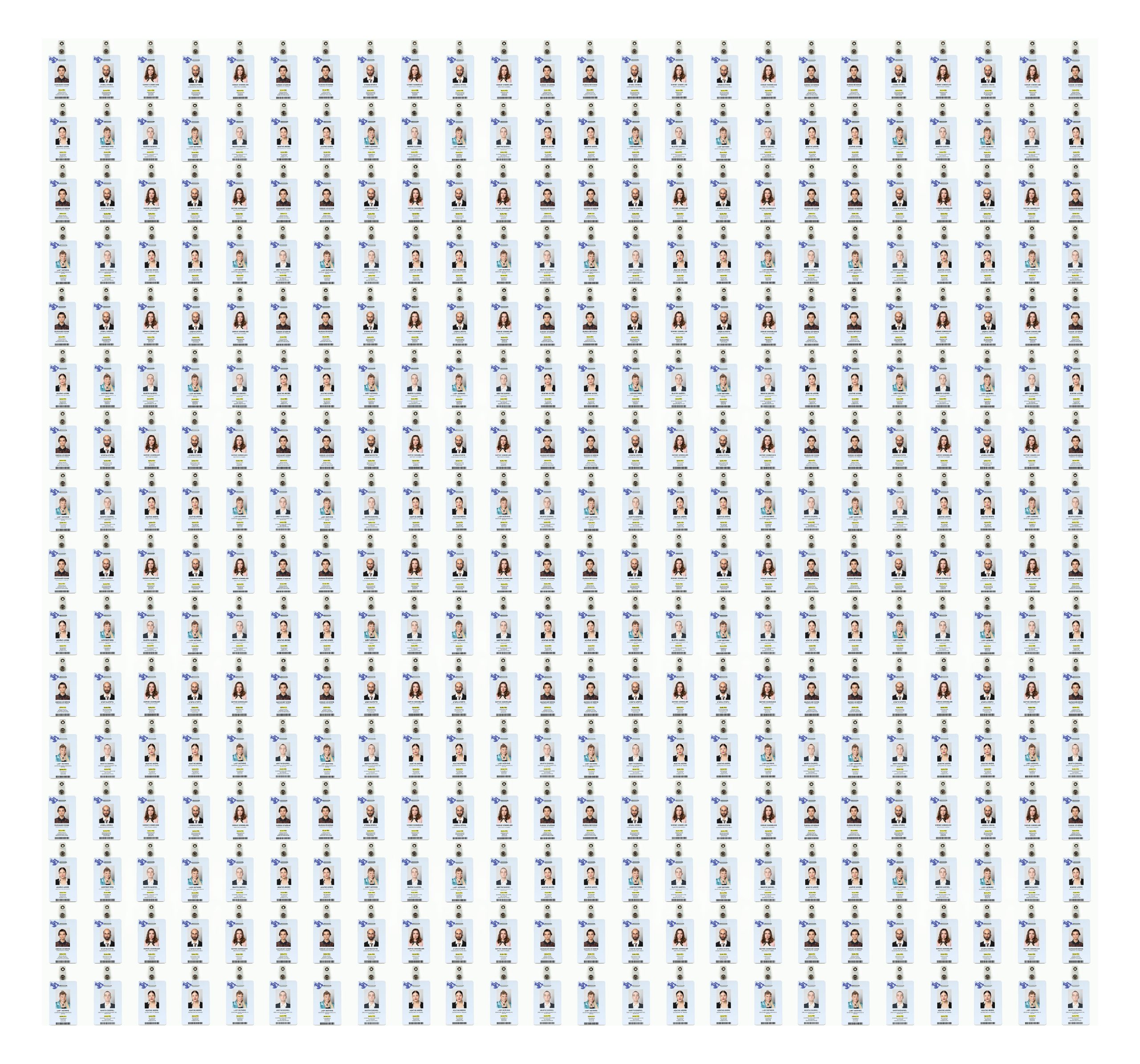
Bureau des intempéries. Office des travaux littéraires, 2023
For this piece, Suzanne Lafont collaborated with six students from the Université de Laval’s fine arts department, inviting them to engage with the biennale as members of the Bureau of Bad Weather: Office of Literary Works. The students took on a fictional, restrictive identity by assuming the role of an office worker with task of reflecting the concept of ‘degrowth’. By appropriating the aesthetics of an administrative bureau, each student embodied a character represented by a name tag. Displayed on the first panel, these "ID cards" are multiplied four times on the subsequent panel, and so forth, culminating in the tenth and final panel, where they become completely illegible. In this humorous approach, the students employ multiplication to convey ideas of ‘degrowth’, ‘unproductivity’, and the gradual erasure of workers’ identities.
© Suzanne Lafont, Camille Lavoie Beaulieu, Charlotte Larouche, Léanne Lefebvre, Rosalie O'callahan, Phile Després et Stevie Stevenoot
LIEU BIENTÔT DÉVOILÉ
yann pocreau
Détours, 2023 - 2024, projection sur mur de glace
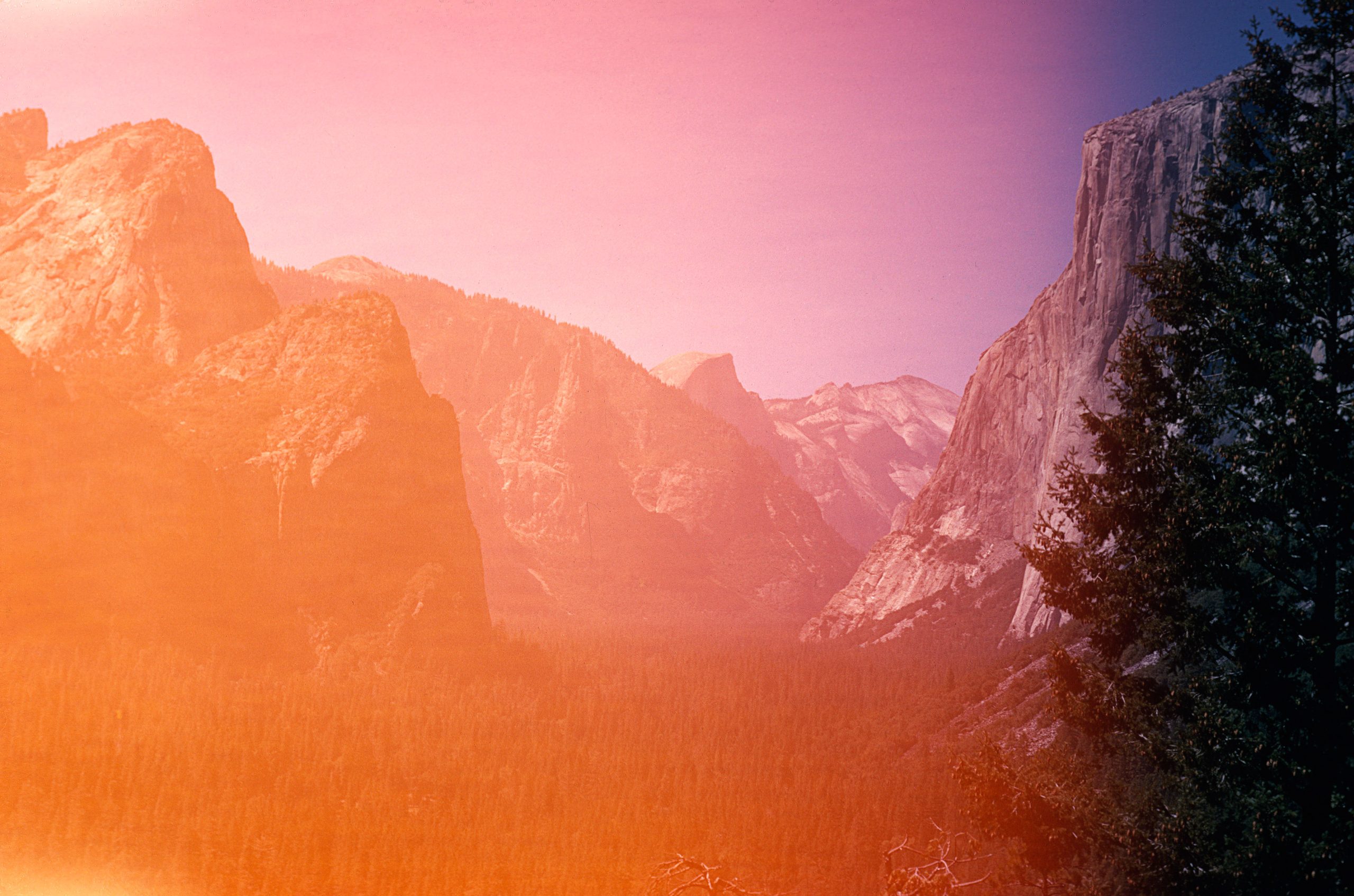
A selection from a group of over 200 vernacular slides is projected onto a wall of ice: photographs of landscapes, family vacations, abstract effects, or botched photos. The images can be associated with one another as they are presented, from one to three at a time, in a random sequence. The wall becomes a screen that will continually evolve throughout the biennale; it absorbs or blurs the images, adding an arbitrary element to each juxtaposition. These associations generate exchanges between the photographs and form the potential starting point of stories or micro-narratives. As we look at these, we might, in turn, project our own memories and fictions onto them.
© Yann Pocreau, Détours, 2023