Public Art
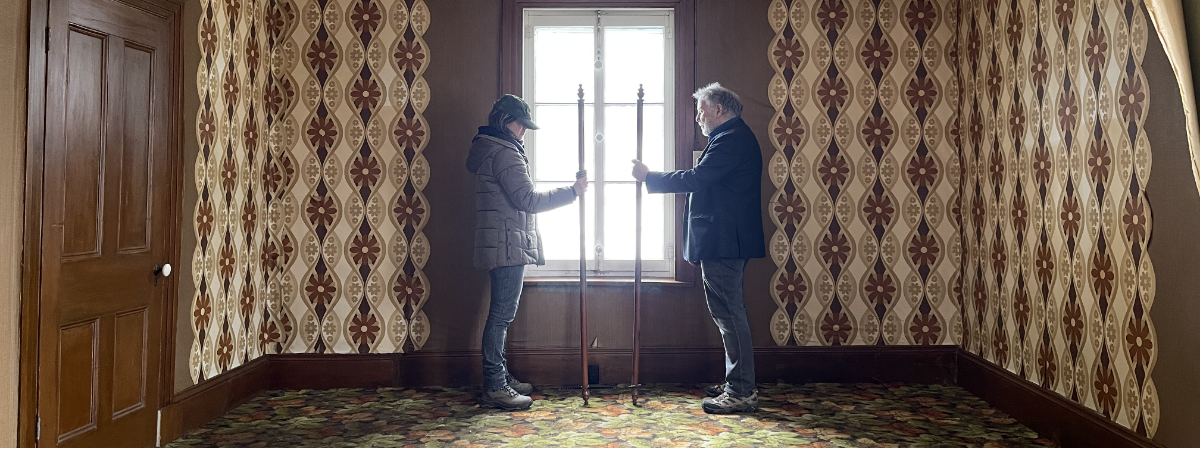
Giorgia Volpe — Rue Saint-Augustin / rue Saint-Jean
Ausculter le plafond — Video Projection
A shifting canopy of light stretches across the façades.
Here, the street becomes a porous surface—listening, reflecting, and echoing its surroundings.
María Ezcurra — Le Lieu
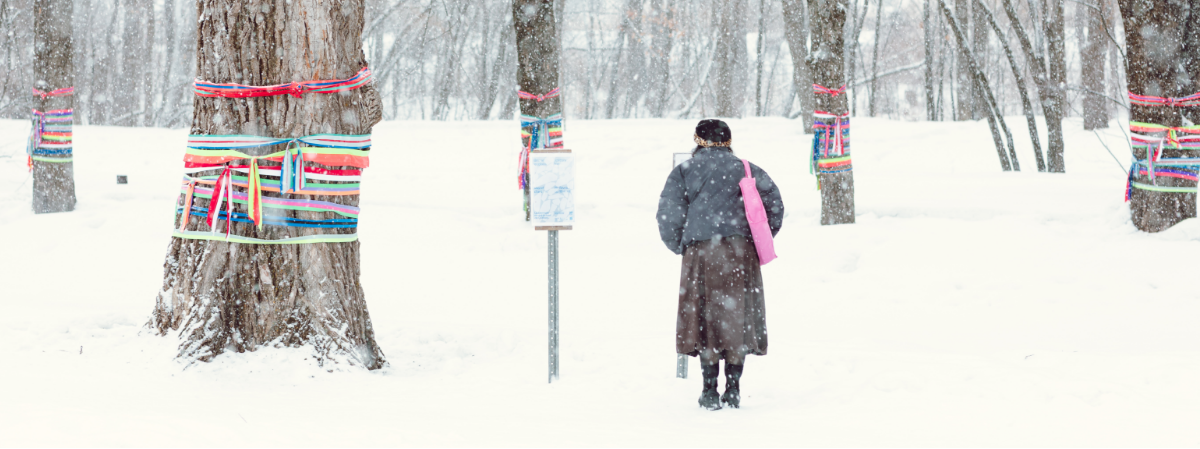
Pas perdus — Installation
Textiles, traces, paths crossing one another.
Ezcurra creates an enveloping environment where movement, memory, and the act of walking become material.
Couzyn van Heuvelen — Côte d’Abraham (alcôves de pierre)
Nitsiit (2023) — Installation
Set within the old stone niches, these metallic forms echo Inuit tools—reimagined and resilient.
A subtle dialogue between urban heritage and northern tradition.
Sabrina Ratté — La Charpente des Fauves
TERRAFORMA (2025) — Video
Within the shadows of this industrial building, Ratté’s digital landscapes emerge.
Speculative architectures and shifting textures open a window onto imagined futures.
Catherine Arsenault — Manif d’art
Nos rivages — Video
An intimate portrait of maritime territory.
Voices, images, and horizons intertwine in a quiet homage to coastal life
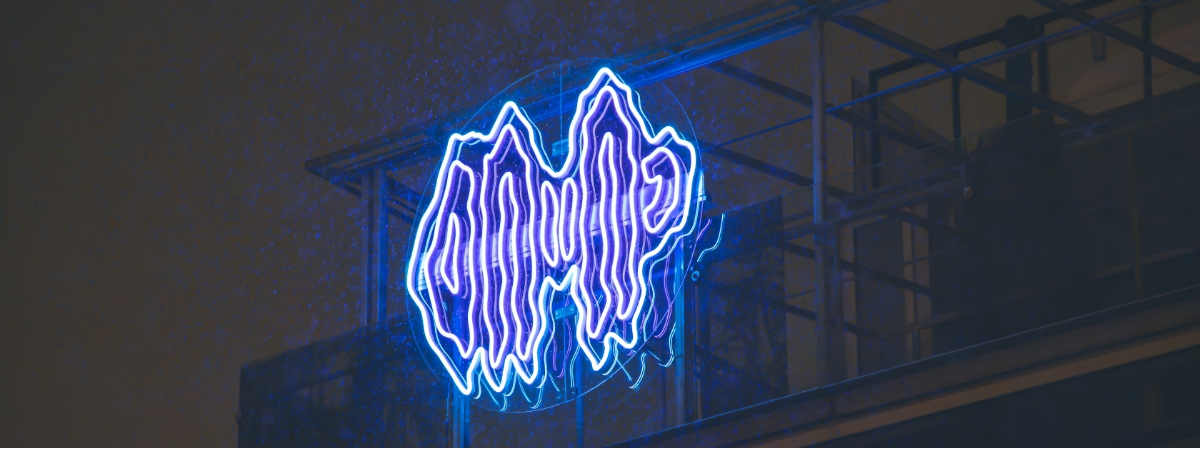
Joi T. Arcand — 400 boulevard René-Lévesque
itihtin — Light Installation
A circular, glowing form inspired by the Cree language.
A beacon that connects past, present, and future along one of Québec City’s main arteries.
Cozic — Domaine de Maizerets
Les sept continents (2025) — Installation
Playful forms and vivid colours reinvent the idea of mapping.
A sculptural landscape that turns the park into a world of its own.
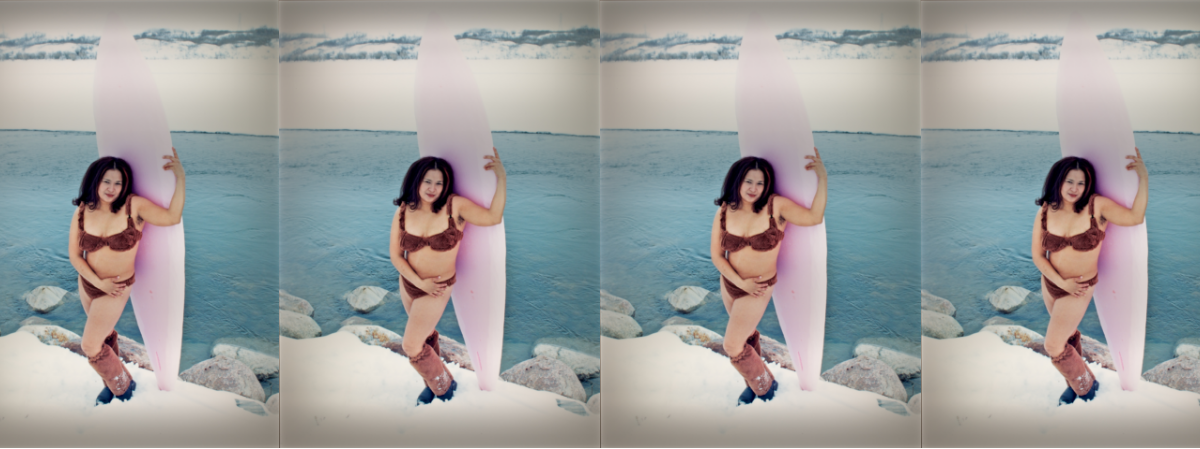
Lori Blondeau — Gare de la Traverse de Lévis
Lonely Surfer Squaw (1997) — Textile Photography
Three large silhouettes stand against the open horizon of the river.
A work that questions representation, presence, and Indigenous identity in public space.
Lori Blondeau — Centre Alyne-LeBel
Asiniy Iskwew (2016) — Lightboxes
Radiant, grounded, and sovereign, the figure illuminated here inhabits the space with quiet strength.
A luminous affirmation at the heart of the city.
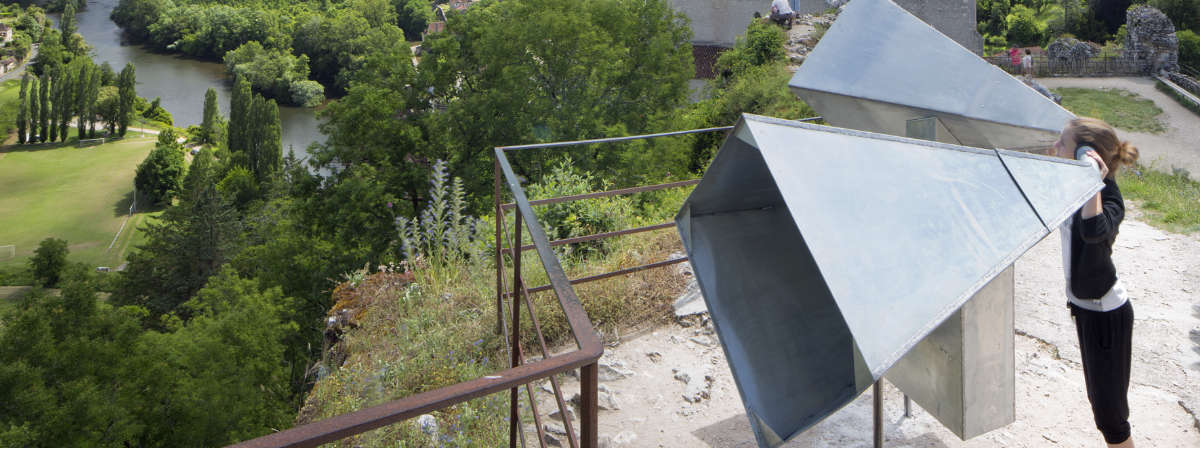
Tania Candiani — Quai des Cageux
Installation
Along the riverfront, Candiani’s intervention listens to the site itself—its wind, its tides, its passing bodies.
A quiet, resonant presence that transforms the quay into a space of vibration.
Tania Candiani
Giorgia Volpe
Lori Blondeau
Joi T. Arcand
COZIC
Is the public art free to visit?
Yes. All public artworks presented for the Biennial are completely free.
Some performances happen at specific times, but access remains open to everyone.
Do I need to follow a specific route?
No. You can explore the artworks at your own pace.
Manif d’art provides a map and information by neighborhood to help you plan your visit, but spontaneous discovery is absolutely encouraged.
Are the artworks family-friendly?
Absolutely. The public artworks are designed to be accessible to families, children, teenagers, and international visitors.
Are the artworks visible both day and night?
Most outdoor installations can be viewed at any time.
Some video works or projections offer a different atmosphere depending on the hour—more intimate at night, more contextual during the day.
Do I need to walk a lot?
It depends on the location.
City-center artworks are close to one another, while those in parks (Maizerets, Montmorency Falls) may require a bit more walking.
All the routes are designed to be comfortable and enjoyable.
Can I take photos?
Of course. Public art is a wonderful opportunity for photography—architecture, river views, installations, performances.
We invite you to share your photos using #manifdart12